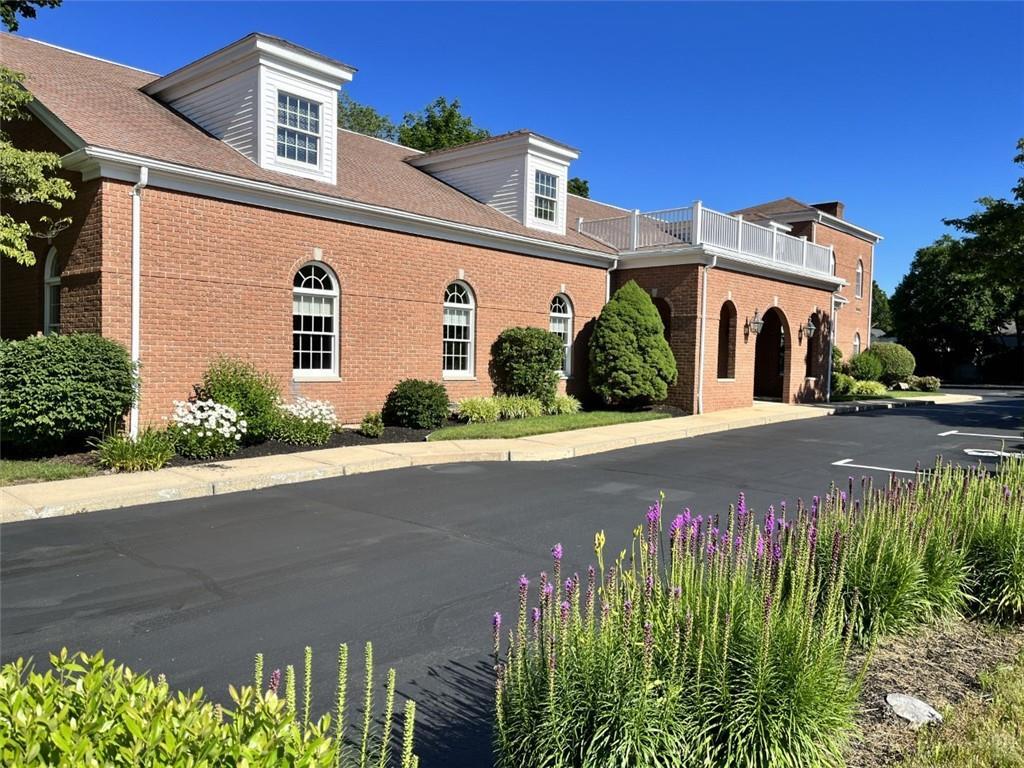
Smithfield's commercial base is unusual for a Rhode Island suburb: it has real corporate office campus space, anchored partly by Bryant University and partly by large employer office parks along Route 116 and Douglas Pike, sitting alongside ordinary suburban retail and residential income property. An owner selling here needs to be honest about which side of that split a replacement candidate falls on, because the risks are almost nothing alike.
Corporate Campus Space Versus Everyday Suburban Retail
A large single-tenant or few-tenant office campus building carries concentration risk that a suburban retail strip simply doesn't — if the anchor employer downsizes or relocates, the income disappears at once rather than gradually. That's not a reason to avoid this type of property in a 1031 replacement, since long lease terms and strong credit tenants can be very attractive, but it does mean the underwriting conversation is fundamentally different than for a neighborhood retail center with a dozen smaller tenants.
Residential income property in Smithfield tends to be smaller multifamily and single-family rental stock spread through the town's suburban neighborhoods, without the density of a North Providence or Pawtucket. That makes it a reasonable diversification play for an owner exchanging out of concentrated commercial property elsewhere, provided the smaller scale is priced in from the start.
What University Proximity Does and Doesn't Do
Bryant University brings some steady demand for nearby retail and service space, but Smithfield isn't a college town in the way South Kingstown is around URI — the university's footprint here is smaller and doesn't drive off-campus housing demand the same way. Owners sometimes overestimate how much lift university proximity gives a Smithfield property; it's a modest, steady factor rather than the defining one.
The bigger driver of local commercial activity is the office park development along Route 295 and Douglas Pike, which draws a mix of regional employers and professional service tenants unrelated to the university at all. Confusing the two demand sources during a replacement search can lead to overpaying for a property based on the wrong rationale.
Confirming a Smithfield Office or Retail Candidate
Worth checking directly before a property is named on the identification list:
- Tenant concentration on office campus buildings, since a small number of large tenants creates outsized vacancy risk
- Remaining lease term relative to the 180-day closing window and any planned hold period
- Parking and site coverage on Route 116 corridor retail, which can limit redevelopment options
- Actual university-driven demand versus assumed demand, since Bryant's local footprint is smaller than some listings suggest
Balancing a Concentrated Office Deal With a Diversified Backup
Because a single-tenant office campus building can be an efficient, well-documented replacement but carries real concentration risk, it's common to pair it on the identification list with a more diversified retail or multifamily candidate, or a passive DST position. That gives the exchange a fallback if the anchor tenant's lease terms or credit profile don't hold up to closer review during the 45-day window. That balance is worth discussing directly with the qualified intermediary before the list is finalized.
What Gets Missed When Office Campus Risk Is Assumed Away
The mistake that shows up most in Smithfield exchanges is treating a large single-tenant office building like any other stabilized asset because it looks clean on paper — long lease, strong rent roll, low turnover. What that view misses is what happens if the one tenant leaves: the replacement's income profile can change entirely, and a lender who priced the loan around that tenant's credit may reprice or pull back. Confirming tenant concentration and lease durability before identification, not after, is what prevents that risk from surfacing during the 180-day closing period. All decisions should be confirmed with a qualified intermediary and tax advisor before the property is locked into the exchange.
Common 1031 Exchange Questions
Is a single-tenant office campus building in Smithfield a good 1031 replacement?
It can be, given long lease terms and strong tenant credit, but it carries real concentration risk that a diversified retail or multifamily property doesn't. That risk should be weighed explicitly, not assumed away because the rent roll looks clean.
How much does Bryant University actually drive demand for Smithfield retail and office space?
Less than owners sometimes assume. It's a steady, modest factor rather than the defining driver the way a university like URI is for its own college town, and it shouldn't be the primary justification for a pricing premium on a nearby replacement candidate.
What happens if your Smithfield office replacement's anchor tenant has lease uncertainty?
That should be resolved or at least clearly understood before the property is added to the identification list, since it directly affects both valuation and lender comfort, and it can change the price a serious buyer is willing to pay.
Should you pair a Smithfield office deal with a more diversified backup on your identification list?
It's a reasonable approach given the concentration risk in single-tenant office property. A diversified or passive backup protects the exchange if the primary candidate's tenant profile changes during due diligence, especially if the anchor tenant's lease renewal timing is uncertain.
Is Route 116 corridor retail in Smithfield a stable 1031 replacement category?
Generally yes, though parking and site coverage limits can restrict future redevelopment. That's worth confirming if the investment thesis depends on future changes to the property, since older suburban retail buildings here weren't always designed with expansion in mind.