Johnston sits just west of Providence along Route 6, and its commercial identity comes from two very different things: ordinary retail and service businesses along Atwood Avenue and Hartford Avenue, and the presence of Rhode Island's only active landfill, which sits within town limits and affects how nearby industrial and warehouse property gets priced and financed.
An owner selling investment property in Johnston should sort a replacement candidate into one of these two categories early, since the diligence questions, comparable sales, and lender expectations differ meaningfully between a retail storefront on Atwood Avenue and a warehouse building a few blocks from the landfill's edge.
Atwood Avenue and Hartford Avenue Carry the Retail Base
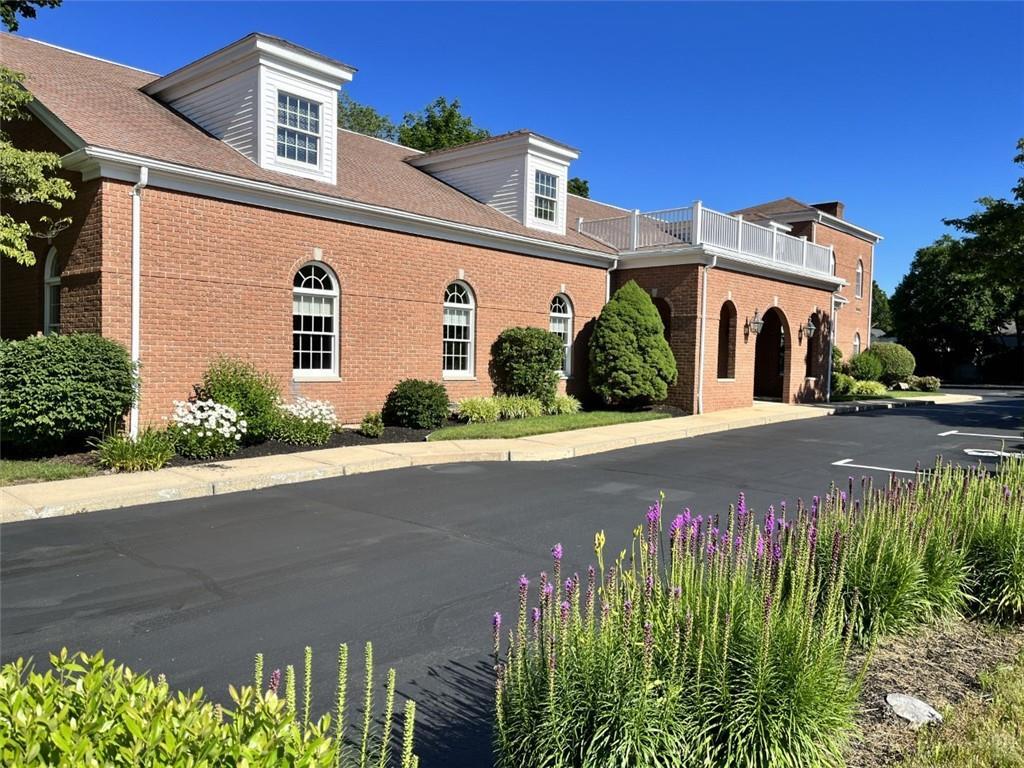
These two corridors hold most of Johnston's everyday commercial activity: strip retail, service businesses, and small professional buildings serving the surrounding residential population. Underwriting here is conventional, with tenant leases and traffic patterns tied to local demand rather than to any of the town's larger industrial land uses. A small plaza or standalone retail building along either corridor can generally be evaluated the same way an owner would evaluate a comparable property in Cranston or Warwick, without any of the added questions that come with land near the landfill.
The State's Only Active Landfill Is a Fact of Life for Nearby Industrial Property
The Rhode Island Central Landfill, operated within Johnston, brings steady truck traffic and some odor exposure to the industrial land closest to it, which shows up directly in how those parcels are priced compared to industrial buildings farther away in town. It also supports demand from waste-hauling and related logistics businesses that specifically want proximity, so the effect is not uniformly negative, but it is localized and needs to be accounted for rather than ignored. An owner considering a candidate within roughly a mile of the landfill's active footprint should ask directly how nearby comparable sales priced that proximity, since two buildings a short drive apart can carry noticeably different valuations for this reason alone.
Warehouse and Flex Space West of Providence
Away from the landfill's immediate footprint, Johnston's warehouse and flex buildings draw on straightforward demand tied to highway access and proximity to Providence. This is a distinct submarket from the landfill-adjacent parcels, generally underwriting more like standard suburban industrial space, with tenant bases in distribution, storage, and light manufacturing. Vacancy in this part of town tends to track the broader Providence-area industrial market rather than any single local factor, which makes it a more conventional replacement candidate for an owner coming out of a similar asset elsewhere in Rhode Island.
What Proximity to the Landfill Does to Comparables
A comparable sale pulled from a parcel near the landfill should not be used to price a property elsewhere in Johnston, and the reverse is equally true. The effect on value is real but confined to a specific radius, so any comparable analysis needs to confirm which sub-area of town both the subject property and the comparable actually sit in.
Financing Johnston Industrial Property on a Deadline
Lenders reviewing industrial property near the landfill will often ask about truck traffic patterns and any recorded easements before finalizing terms, which can add time to the underwriting process.
- Distance from the parcel to the Central Landfill and any related easements
- Truck traffic patterns affecting site access
- Comparable sales pulled from the correct sub-area of town
- Lease strength for Atwood Avenue or Hartford Avenue retail tenants
- A backup warehouse candidate elsewhere west of Providence
Common 1031 Exchange Questions
Does Johnston's landfill affect nearby property values?
Yes, but the effect is localized to industrial parcels near the landfill's footprint. It does not apply townwide, so comparable sales need to be matched to the correct sub-area.
What kind of retail is typical along Atwood and Hartford Avenue?
Everyday strip retail and service businesses serving the surrounding residential neighborhoods, underwritten conventionally without the landfill-related considerations that apply to nearby industrial land.
Why would a lender ask about truck traffic for a Johnston industrial property?
Landfill-related truck traffic can affect site access and wear on shared roadways, so lenders reviewing nearby industrial parcels often want that pattern confirmed before finalizing terms.
Should a landfill-adjacent comparable be used to price a property elsewhere in Johnston?
No. The pricing effect from landfill proximity is confined to a specific radius, and using it to price a property in another part of town will produce a misleading number.
Is Johnston primarily a warehouse and flex market?
It is a mix of retail and industrial. Warehouse and flex space has grown due to highway access and proximity to Providence, but Atwood and Hartford Avenue retail remains a significant part of the local commercial base, and the two should be evaluated as separate categories rather than one blended Johnston market.
How far should an owner expect a landfill-related discount to extend?
There is no fixed radius, since it depends on wind patterns, truck routes, and the specific parcel's visibility to the site, but comparable sales from the immediate area around the landfill's active footprint should not be used to price property a mile or more away.
Should Route 6 access factor into a Johnston identification decision?
Yes. Direct access to Route 6 supports both the retail corridors and the warehouse submarket, and a candidate with strong highway access will generally close faster and finance more easily than one on a secondary local road tucked away from the main corridor.